
A perfectly tailored suit begins long before the first stitch. It begins with accurate measurements. If you are wondering how to measure yourself for a suit sizing guide at home, understanding where and how each measurement should be taken can help you communicate your size more accurately and avoid some of the most common fitting problems.
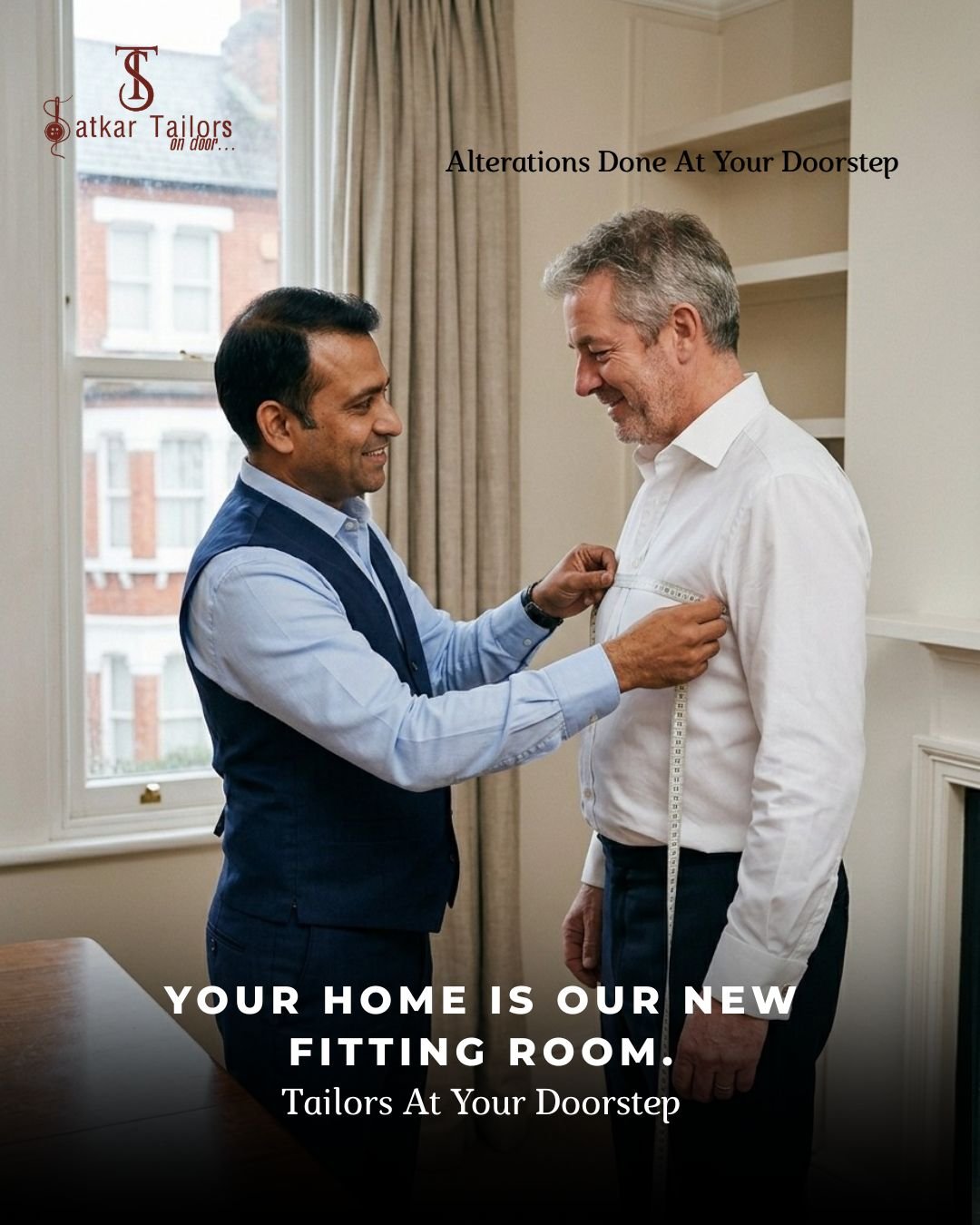
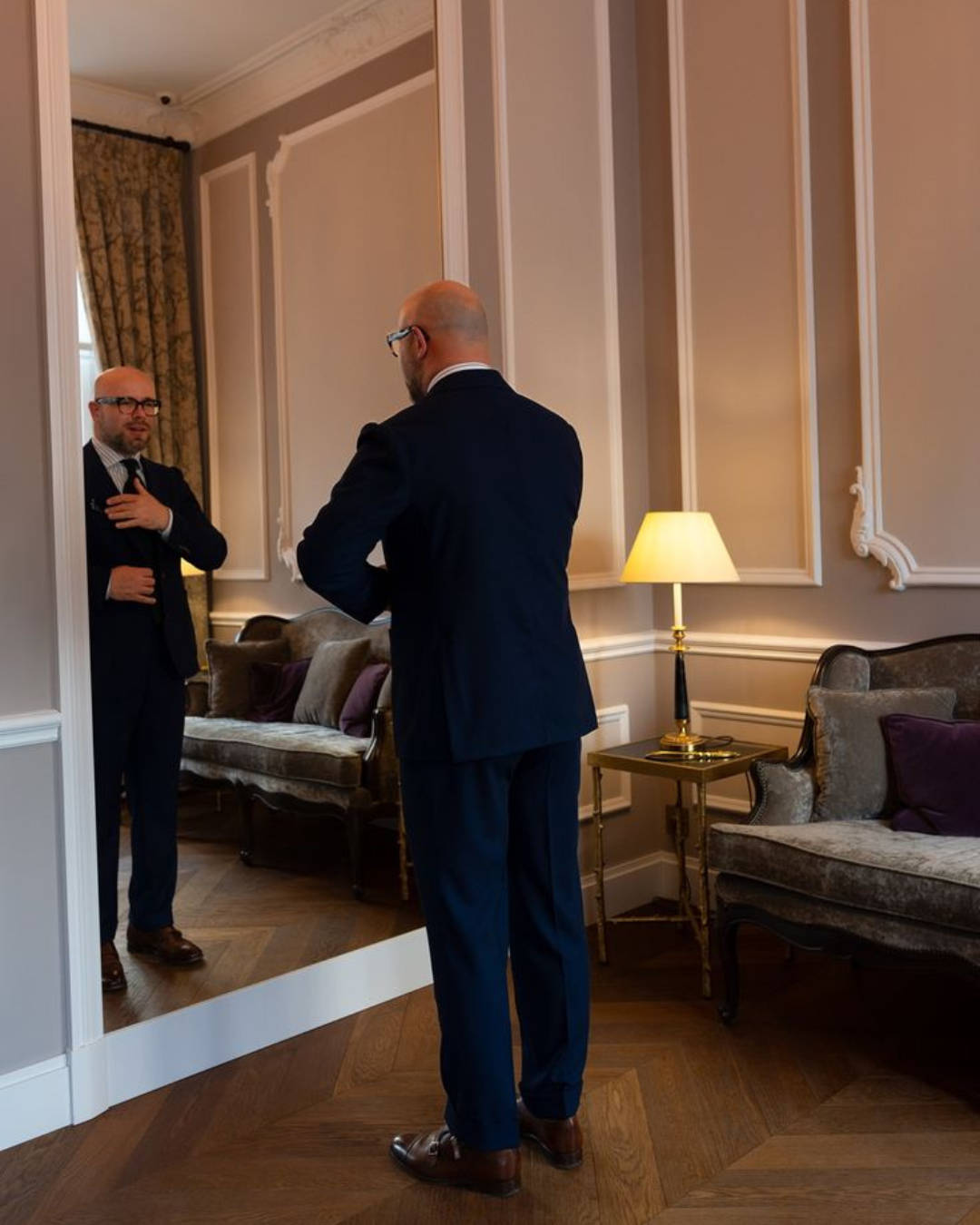
But there is an important distinction every gentleman should understand: measurements and fit are not the same thing.
Two men can have almost identical chest, waist and sleeve measurements yet require very different jackets because of differences in shoulder slope, posture, body balance or arm position. This is particularly important when measuring for a bespoke suit, where a tailor is not simply recording dimensions but interpreting the architecture of your body.
For CEOs, founders, professionals, entrepreneurs, grooms and gentlemen commissioning custom clothing remotely, accurate suit measurements provide the foundation for a better garment.
At Satkar Tailors, measurements are considered alongside posture, proportions, garment construction and the client’s preferred silhouette.
Email: satkartailorsondoor@gmail.com
Website: https://satkartailorsondoor.com/
Phone: +91 8097157470
Address : https://share.google/bTDw94odeJOvPTaHA
Why Accurate Suit Measurements Matter
A difference of a centimetre may sound insignificant until that difference appears in the wrong part of a tailored jacket.
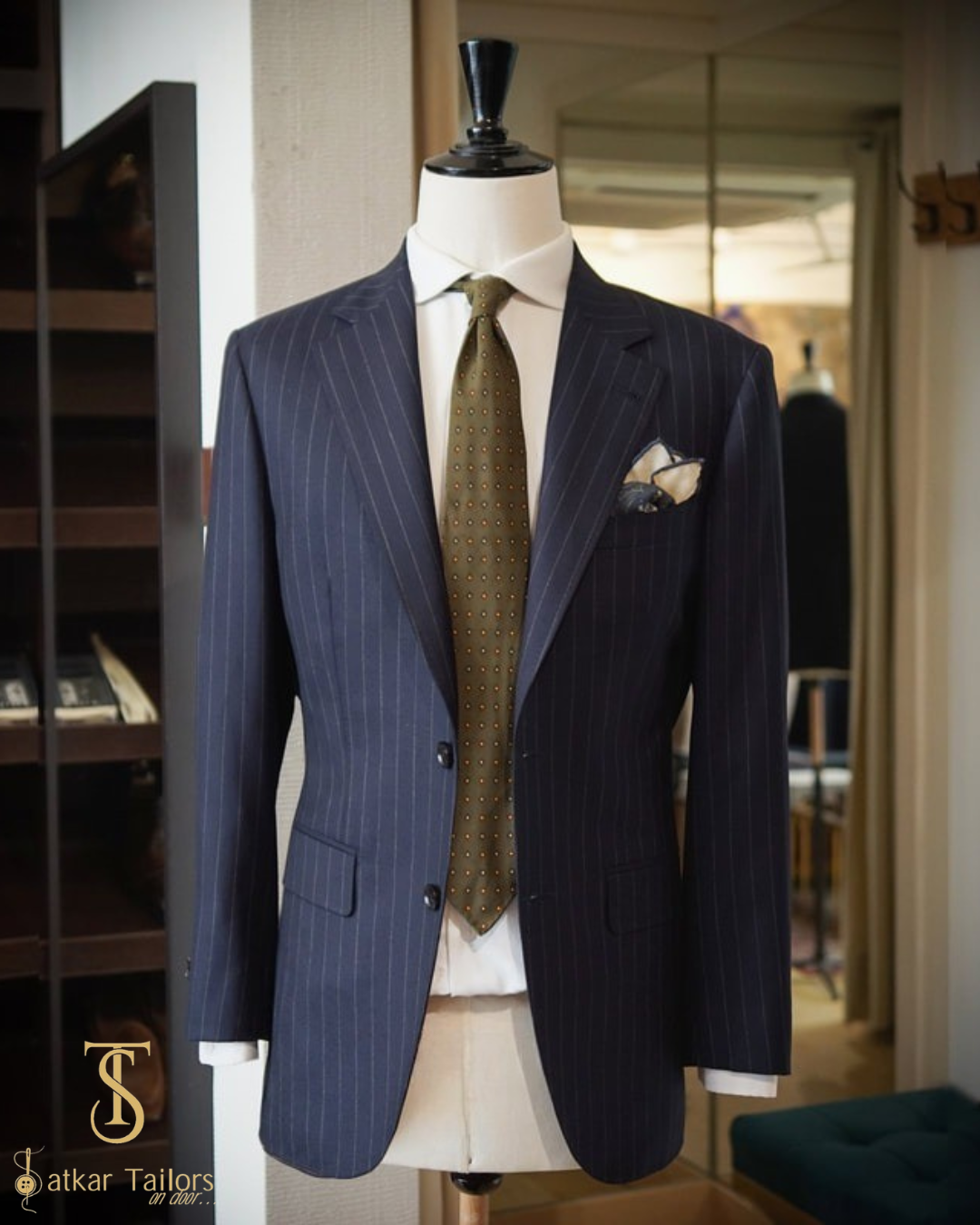
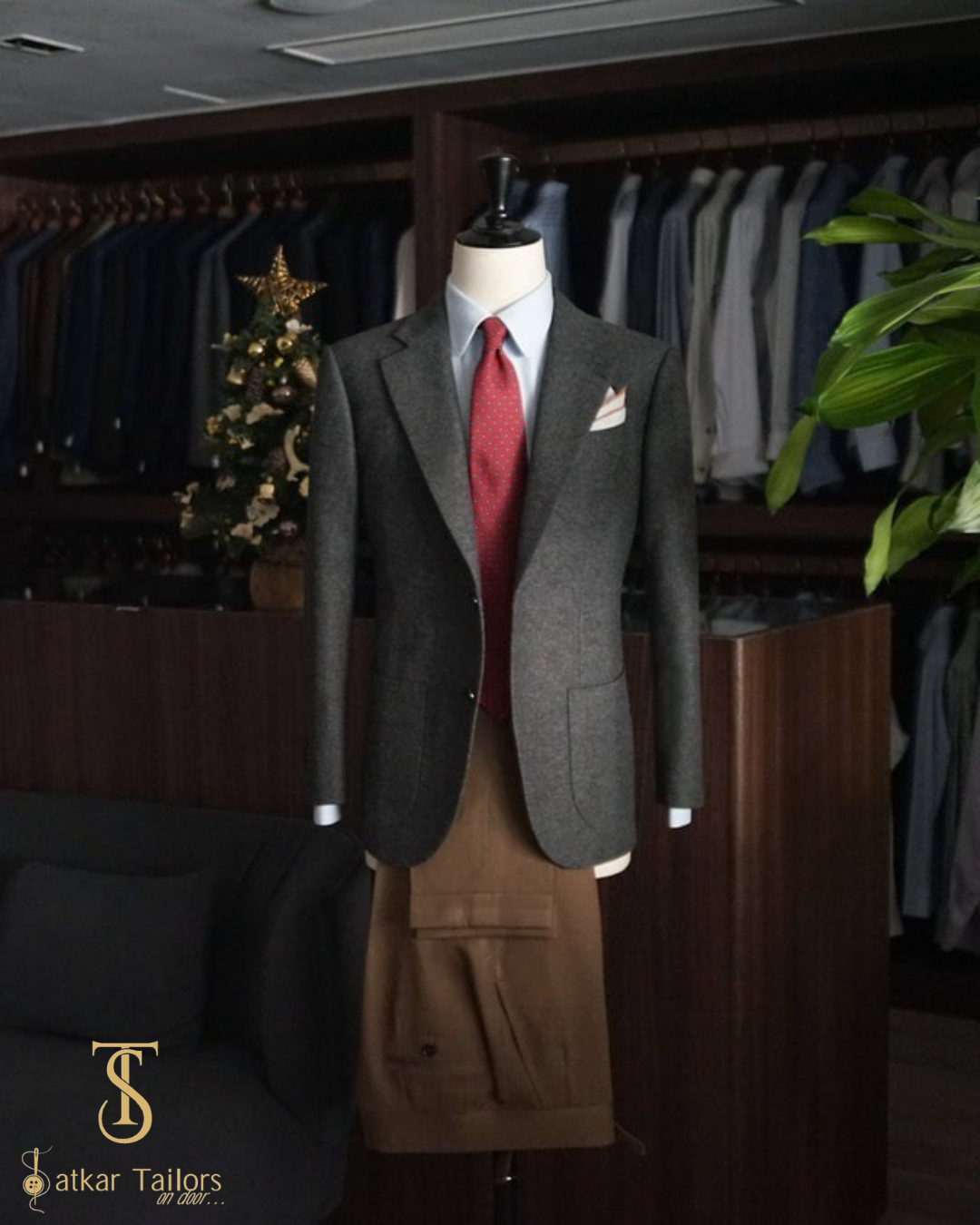
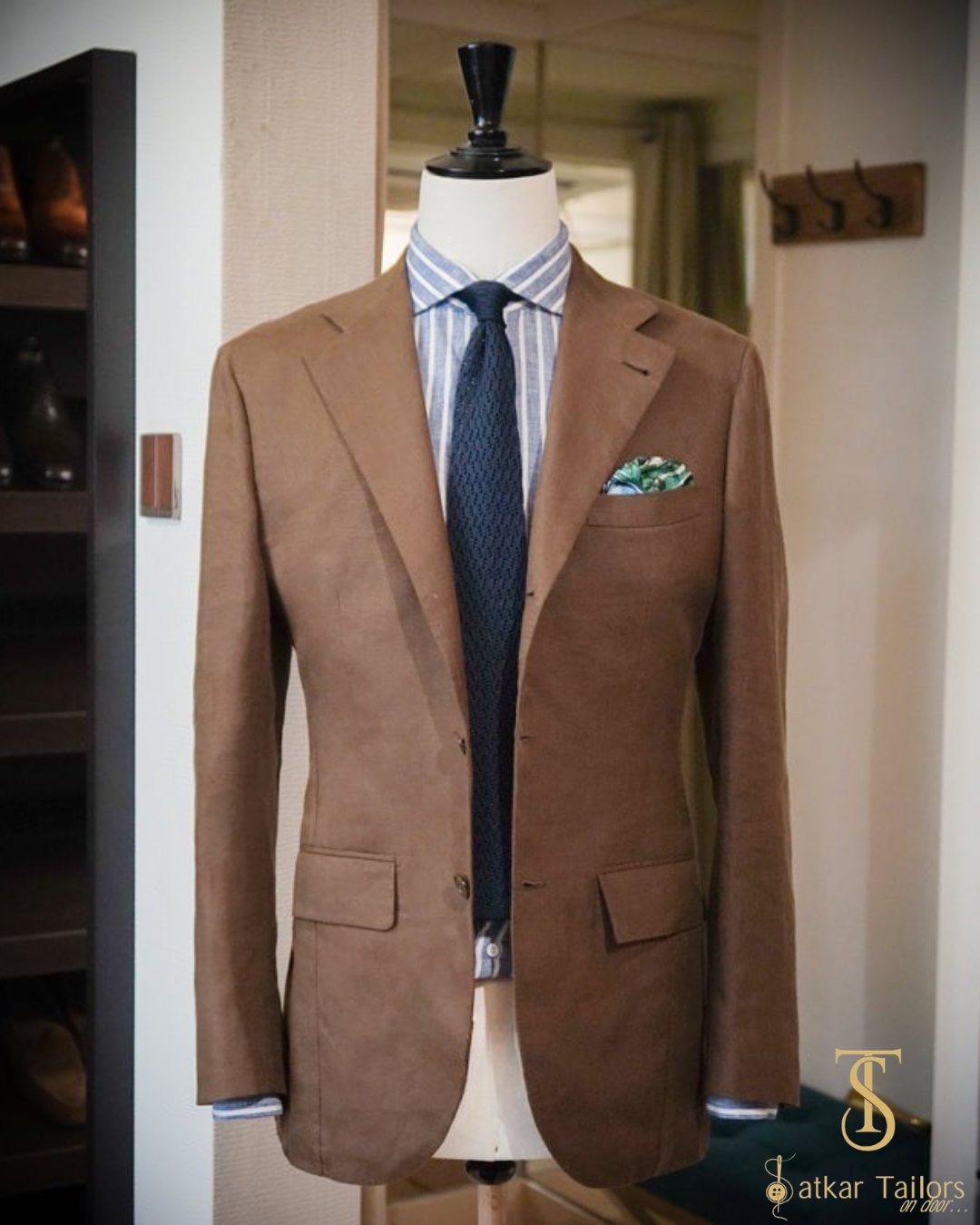
Incorrect chest measurements can influence comfort and shaping. Incorrect sleeve measurements affect how the jacket interacts with the shirt cuff. A badly measured trouser waist changes where the trousers sit, which can then affect the apparent rise and trouser break.
The purpose of accurate measuring is not to make the garment as close to your skin as possible.
It is to give the tailor reliable information from which appropriate wearing ease, construction and proportions can be developed.
This is one reason copying measurements from your favourite T-shirt or jeans is not an effective suit sizing guide.
A tailored jacket is a structured garment.
It needs to accommodate your body, shirt, internal construction and movement while still maintaining clean lines.
What You Need Before Measuring Yourself for a Suit
Keep the process simple. You need a flexible tailor’s measuring tape, a full-length mirror and somewhere to record each measurement. Having another person assist you is strongly recommended because several important measurements are difficult to take accurately on yourself.
Wear a well-fitting shirt and lightweight trousers rather than measuring over a jacket, hoodie or bulky clothing.
Stand naturally.
Do not expand your chest, pull in your stomach or force your shoulders backwards. If you create an artificial posture while measuring, the numbers describe a body position you will not maintain while actually wearing the suit.
Keep the tape comfortably against your body without pulling it excessively tight.
Most importantly, do not add your own arbitrary allowances unless your tailor specifically instructs you to do so. Provide body measurements as requested and allow the tailoring process to determine appropriate garment ease.
How to Measure Yourself for a Suit: Step-by-Step
The exact measurement system used by tailoring houses can vary, so if you are ordering from a specific tailor, always follow that tailor’s measurement instructions.
For general reference, these are the measurements you are most likely to encounter.
1. How to Measure Your Chest
Stand naturally with your arms relaxed.
Wrap the measuring tape around the fullest part of your chest, passing underneath the arms and across the shoulder blades.
Keep the tape approximately level around the body.
Do not inflate your chest.
The tape should sit close enough to provide an accurate circumference without compressing the body.
Your chest measurement is one of the fundamental dimensions used when assessing jacket sizing, but it should never be treated as the only measurement that matters.
A 40-inch chest does not automatically mean every size 40 jacket will fit correctly.
2. How to Measure Your Shoulders
Shoulder measurement is particularly difficult to take accurately without assistance.
Measure across the upper back from approximately the point where one shoulder transitions into the arm to the corresponding point on the other shoulder, following the natural contour rather than pulling the tape rigidly through the air.
The exact landmarks can differ according to the tailor’s measuring system.
Shoulder width has a major impact on how a jacket appears.
Too much width can create overhang and collapse at the sleeve head. Too little can produce pulling and restricted movement.
For a true bespoke suit from Satkar Tailors, the tailor can also consider shoulder slope and differences between the left and right sides rather than relying solely on one horizontal measurement.
3. How to Measure Your Neck
Wrap the measuring tape around the base of your neck where a shirt collar would naturally sit.
The tape should be comfortable rather than restrictive.
Neck measurement is especially important when commissioning custom shirts because an incorrectly sized collar can become uncomfortable quickly, particularly when worn with a tie.
Do not measure an existing shirt collar unless the tailor specifically asks for garment measurements.
Body measurements and finished garment measurements are different.
4. How to Measure Your Jacket Sleeve
Sleeve measuring systems vary.
One common approach begins around the shoulder point and follows the arm down toward the wrist, where you want the jacket sleeve to finish.
Keep your arm relaxed rather than locking it completely straight.
Some tailoring systems use multiple measurements to establish sleeve length and arm position, which is one reason you should follow the instructions provided by the person making your garment.
The finished jacket sleeve should generally allow a small amount of shirt cuff to remain visible when the arms are relaxed.
Around a quarter to half an inch is a traditional guideline, although individual styling and proportions can influence the final result.
5. How to Measure Your Biceps
Allow your arm to hang naturally.
Wrap the tape around the fullest part of the upper arm without flexing your biceps.
The tailor needs enough information to provide movement while avoiding unnecessary excess fabric.
This measurement can be especially relevant for athletic men.
A gentleman with developed shoulders and arms may struggle with ready-to-wear jackets because increasing the standard jacket size to accommodate his upper body can leave excessive room elsewhere.
Custom tailoring provides greater control over these relationships.
6. How to Measure Your Natural Waist
Do not automatically measure where the waistband of your jeans happens to sit.
For body measurement purposes, the waist measurement requested by a tailor may be taken around a specific point of the torso, often near the natural waist.
Stand normally and breathe naturally.
Do not pull in your stomach.
Wrap the tape around the body, keeping it level and comfortably close.
This measurement helps the tailor understand the relationship between your chest, waist and hips, which influences jacket shaping.
7. How to Measure Your Hips or Seat
Wrap the tape around the fullest part of your hips and seat.
Keep the tape level.
This measurement matters for both jackets and trousers because the garment needs sufficient room to fall cleanly around the lower torso.
If the hip measurement is too tight, trousers can pull and jacket vents may spread unnecessarily.
Too much room creates the opposite problem.
The objective is a clean silhouette combined with movement.
8. How to Measure Your Trouser Waist
This is where many home measurements go wrong.
Measure around the position where you intend your suit trousers to sit.
Traditional tailored trousers can sit differently from low-rise jeans, so simply copying your denim size is unreliable.
Your labelled jeans size may also differ from the actual physical dimensions of the garment.
Place the tape around the intended waistband position and keep it level.
The finished trousers should remain secure without requiring a belt to compensate for a dramatically oversized waistband.
9. How to Measure the Trouser Outseam
The outseam generally runs from the intended top of the trouser waistband down the outside of the leg toward the desired trouser length.
Stand upright and avoid bending down to read the tape yourself if possible because doing so can change the measurement.
Have another person assist you.
The final trouser length will also depend on the style of break you prefer.
10. How to Measure Your Inseam
The inseam runs from the crotch down the inside of the leg.
Again, assistance makes this considerably easier.
An alternative method may involve measuring a pair of trousers that already fits correctly, but only do this if your tailor specifically requests garment measurements rather than body measurements.
The inseam contributes to trouser length, but it does not tell the entire fit story.
Rise and the intended waistband position also matter.
11. How to Measure Your Thigh
Wrap the measuring tape around the fullest part of your upper thigh.
Do not pull it tight enough to compress the leg.
A tailored trouser should have enough room to sit and walk comfortably while maintaining a clean line.
This is another area where “slimmer” does not automatically mean “better.”
Overly tight trousers can develop tension lines across the thigh and seat while restricting movement.
12. How to Measure Your Knee
Depending on the trouser pattern and tailoring system, a knee circumference may be requested.
Wrap the tape around the knee at the point specified by your tailor.
This helps establish the progression from thigh to hem and influences the trouser’s overall silhouette.
A contemporary tapered trouser and a traditional straight trouser require different relationships between these measurements.
13. How to Measure Your Trouser Hem or Ankle
Your tailor may ask for the desired trouser opening rather than a body measurement around your ankle.
This is fundamentally a styling decision.
A narrow trouser opening creates a different relationship with footwear and trouser break than a wider traditional leg.
Do not automatically request the narrowest possible opening.
Your height, shoe size, thigh proportions and intended suit style should all influence the choice.
Suit Measurements: Quick Reference Guide
| Measurement | General Measuring Area | Why It Matters |
| Neck | Around shirt collar position | Shirt and collar fit |
| Shoulders | Across upper back | Jacket architecture |
| Chest | Fullest chest circumference | Jacket sizing and shaping |
| Biceps | Fullest upper arm | Sleeve comfort |
| Sleeve | Shoulder toward wrist | Jacket sleeve length |
| Waist | Requested torso position | Jacket shaping |
| Hips/Seat | Fullest lower torso | Jacket and trouser balance |
| Trouser Waist | Intended waistband position | Trouser fit |
| Thigh | Fullest upper leg | Comfort and silhouette |
| Inseam | Crotch to trouser hem | Leg length |
| Outseam | Waistband to hem | Overall trouser length |
| Knee | Around specified knee position | Trouser taper |
These measurements are useful, but they are not a substitute for a tailor’s interpretation.
Body Measurements vs Garment Measurements
This distinction is critical when learning how to measure yourself for a suit.
A body measurement records your physical dimensions.
A garment measurement records the dimensions of the finished jacket or trousers.
They are not interchangeable.
For example, the chest of a finished jacket requires room beyond your body’s actual chest circumference so you can breathe, move and wear a shirt underneath it.
This additional room is often discussed in terms of ease.
If you measure a jacket you already own and submit those numbers when a tailor expects body measurements, the resulting garment could be significantly incorrect.
Before sending measurements, always establish which system is being requested.
Why Your Height and Weight Are Not Enough
Online suit sizing tools often begin with height and weight.
These figures can help estimate a starting size, but they cannot accurately describe your body.
Imagine two men who are both 180 cm tall and weigh exactly the same.
One may have broad shoulders, a narrow waist and muscular thighs.
The other may carry more weight around his torso with comparatively slimmer legs.
Their suits should not be patterned identically.
Height and weight are useful reference information.
They are not substitutes for actual suit measurements.
Why Posture Matters When Measuring for a Bespoke Suit
This is where measuring for a bespoke suit becomes fundamentally different from completing a sizing form.
A tape measure records distance.
It cannot fully describe shape.
A client may have an erect posture, forward shoulders, a prominent chest or differences between the height of each shoulder.
Arm position also matters. Some men’s arms naturally sit further forward than others, influencing sleeve pitch and how the jacket hangs.
These characteristics affect jacket balance even when basic circumferences are accurate.
A skilled bespoke tailor observes the client as well as measuring him.
That observation is one of the reasons an in-person fitting remains valuable.
Common Home Suit Measurement Mistakes
The first major mistake is measuring over bulky clothing. This can add unnecessary volume and make the measurements unreliable.
Another is pulling the tape excessively tight because the wearer wants the final suit to appear slimmer. The tailor needs your actual dimensions, not aspirational ones.
The opposite problem also occurs when people deliberately add several centimetres “for comfort.” Unless instructed otherwise, let the tailor determine appropriate ease.
Holding your stomach in is another common error.
So is artificially pushing the shoulders backwards.
Perhaps the biggest mistake is trying to measure difficult areas such as the shoulders and back completely alone. Small movements made while reaching for the tape can change the result.
Whenever possible, ask someone to assist you.
Measuring Yourself vs Measuring a Suit That Already Fits
If you already own a jacket that fits exceptionally well, its measurements can sometimes provide useful reference information.
But this needs to be done carefully.
Garment measurements follow different methods from body measurements, and different tailors may measure jackets differently.
For example, chest width may be measured flat from pit to pit and converted into a circumference, while shoulder width may depend on where the measurer identifies the shoulder seams.
A familiar garment can therefore provide useful supporting data, but it should not automatically replace the measurement system requested by your tailor.
Ready-to-Wear vs Made-to-Measure vs Bespoke Measurements
| Feature | Ready-to-Wear | Made-to-Measure | Bespoke |
| Starting Point | Standard size | Existing base pattern | Individual client |
| Body Measurements | Limited | Detailed | Detailed |
| Pattern | Predetermined | Adjusted | Individually developed |
| Posture | Limited consideration | Some systems accommodate it | Can be closely considered |
| Shoulder Asymmetry | Mostly through alteration | Some adjustment | Can inform pattern |
| Styling | Predetermined | Customisable | Highly customisable |
| Fit Potential | Depends on standard size compatibility | High | Maximum individualisation potential |
The comparison explains why having accurate measurements is particularly valuable for custom tailoring.
The more individualised the garment becomes, the more information the tailor can potentially use.
Can You Really Measure Yourself for a Bespoke Suit at Home?
You can collect useful measurements at home.
Whether those measurements alone are sufficient for true bespoke tailoring is a different question.
Traditional bespoke involves more than submitting chest, waist and sleeve numbers.
Pattern development, posture assessment and fittings contribute to the process.
For remote clients, photographs, video consultations, measurements from an existing garment and additional fit information may help a tailor understand the body more completely, depending on that tailor’s process.
If an in-person consultation is available, it remains valuable because the tailor can directly observe characteristics that a measuring tape cannot capture.
How Satkar Tailors Measures for a Custom Suit
Satkar Tailors approaches measurement as part of a larger tailoring process rather than an isolated checklist.
The client’s body, preferred fit, intended occasion and garment construction all influence the final result.
A business suit for a CEO needs to perform differently from a groom’s tuxedo. A relaxed sport coat can require a different silhouette from a structured boardroom jacket.
The tailoring process therefore begins with understanding the person who will actually wear the garment.
Step 1: Book
Arrange a consultation with Satkar Tailors according to your schedule and service availability.
Step 2: Visit
Where doorstep service is available, a tailoring consultation can be arranged at your home, office or preferred location.
This is particularly useful for professionals and wedding clients who may not have time for repeated visits to a traditional tailoring shop.
Step 3: Design
Before measurements become a finished pattern, the purpose of the garment is discussed.
Fabric, lapel style, pockets, lining, buttons, construction and silhouette can be considered according to the client’s requirements.
Step 4: Measure
Detailed measurements are taken alongside observations about proportions and posture.
Shoulder balance, jacket length, chest, waist, hips, sleeves and trouser dimensions can then be considered as parts of one complete silhouette rather than independent numbers.
Step 5: Deliver
After the garment has been tailored and the appropriate fitting process completed, it is finished and delivered, with refinement handled where necessary.
Full Canvas, Half Canvas and Fused Suits: Why Measurements Affect Construction
Excellent measurements alone do not create an excellent suit.
Construction matters too.
A full-canvas jacket uses a traditional internal canvas structure through much of the front. This contributes to the jacket’s shape and allows the structure to interact with the wearer’s body.
Half-canvas construction generally uses canvas through the upper portion and can provide an effective combination of structure, craftsmanship and practicality.
Fused construction uses adhesive interlining to establish structure and represents another method of jacket construction.
In every case, the outer measurements need to work with the internal architecture.
That is why bespoke tailoring is fundamentally a three-dimensional craft rather than a spreadsheet of numbers.
Hand Craftsmanship and Pattern Interpretation
The best measurements in the world are useless if they are interpreted poorly.
Tailoring requires translating numbers into shape.
The cutter or pattern maker needs to understand how chest, shoulder, waist, jacket length and posture interact.
Then construction and pressing help transform flat fabric into a garment designed for a three-dimensional body.
Hand-finishing techniques may contribute to areas such as lapels, collars and other details depending on the construction.
This combination of measurement, pattern development, cutting and craftsmanship separates genuine tailoring from simply selecting a size.
Premium Tailoring Services by Satkar Tailors
Satkar Tailors offers:
- Full bespoke suits
- Semi-bespoke suits
- Handmade suits
- Made-to-measure
- Custom suits
- Full canvas suits
- Half canvas suits
- Fused suits
- Blazers
- Sport coats
- Tuxedos
- Wedding suits
- Jodhpuri suits
- Custom shirts
Clients commissioning a wedding garment can also explore Satkar Tailors’ wedding suits, where fit can be coordinated with the styling and requirements of the celebration.
Measuring for a Wedding Suit
Wedding measurements deserve particular attention because the groom may wear the garment continuously for many hours.
Do not request an excessively tight suit simply because you want to appear slimmer in photographs.
A wedding suit must work while standing, sitting, walking, greeting guests and dancing.
If your weight is actively changing before the wedding, communicate that with your tailor.
Timing the fitting intelligently can reduce unnecessary last-minute alterations.
Wear the actual wedding shoes and shirt during later fit checks wherever practical because these pieces influence trouser length and visible shirt cuff.
Measuring for a Business Suit
Business tailoring should prioritise consistency, movement and authority.
A CEO or professional may spend hours seated before walking directly into a presentation or formal dinner.
The suit therefore needs enough ease to function while maintaining a disciplined silhouette.
When discussing measurements, tell your tailor how you actually use your suits.
If you travel frequently, sit for long periods or prefer a particular trouser position, that information can influence decisions that raw measurements cannot communicate.
Good custom tailoring begins with numbers.
Exceptional tailoring begins with context.
How to Check Your Measurements Before Sending Them
Measure twice.
If two attempts produce significantly different numbers, do not simply average them. Determine why the measurements differ and repeat the process.
Keep the tape level when taking circumferences.
Stand naturally.
Ask another person to help with shoulders, sleeve length and trouser lengths.
Record measurements immediately rather than relying on memory.
If your tailor provides video or photographic instructions, follow those instructions precisely because measuring conventions vary.
And never quietly modify a measurement because you think the tailor will make the garment too loose or tight.
Communicate your preferred fit separately.
Why Professional Measurement Still Matters
Learning how to measure yourself for a suit is useful even if you ultimately choose professional tailoring.
It helps you understand your body and makes conversations with your tailor more informed.
But a professional fitting offers something a tape measure alone cannot provide: interpretation.
An experienced tailor can see whether one shoulder sits lower, whether your posture changes the jacket balance, how your arms naturally rest and where the garment should create visual correction.
For clients seeking a highly individual result, these observations can be just as valuable as the measurements themselves.
Book a Professional Suit Measurement With Satkar Tailors
Accurate suit measurements create the foundation.
Pattern development, construction, fitting and craftsmanship determine what happens next.
If you need to take measurements remotely, use this suit sizing guide as a starting point, but follow your tailor’s specific measuring method before submitting final numbers.
If professional fitting is available to you, having an experienced tailor assess your body directly removes much of the guesswork involved in measuring for a bespoke suit.
Satkar Tailors combines years of tailoring expertise with custom fitting and doorstep convenience for CEOs, founders, professionals, entrepreneurs, grooms and gentlemen who expect more than standardized sizing.
Email: satkartailorsondoor@gmail.com
Website: https://satkartailorsondoor.com/
Phone: +91 8097157470
Address : https://share.google/bTDw94odeJOvPTaHA
Your measurements are numbers.
The skill lies in turning those numbers into a suit that looks as though it could only belong to you.
Frequently Asked Questions
How to measure yourself for a suit accurately?
Wear lightweight clothing, stand naturally and use a flexible measuring tape. Record the chest, shoulders, neck, waist, hips, sleeves and required trouser measurements according to your tailor’s instructions. Having another person assist you improves accuracy.
Can I measure myself for a bespoke suit?
You can collect body measurements at home, but bespoke tailoring can involve more than measurements. Posture, shoulder balance, body proportions, pattern development and fittings can also influence the final garment.
What measurements are needed for a men’s suit?
Common suit measurements include the chest, shoulders, neck, sleeve, waist, hips or seat, trouser waist, thigh, inseam and outseam. Individual tailors may request additional measurements.
Should I measure my body or an existing suit?
Follow your tailor’s instructions. Body measurements and garment measurements are different and should not be substituted for one another unless the tailor specifically requests it.
How tight should the measuring tape be?
The tape should sit close to the body without compressing it. Do not deliberately tighten the tape or add extra room unless your tailor’s measuring instructions specifically tell you to do so.
Should I suck in my stomach when taking suit measurements?
No. Stand and breathe naturally. Your tailor needs measurements representing the body position you normally maintain while wearing the garment.
Can I use my jeans size as my suit trouser waist measurement?
It is better to measure your actual intended trouser waist position. Labelled jeans sizes may not correspond exactly to physical body measurements, and suit trousers can sit at a different height.
What is the difference between suit measurements and suit size?
Measurements describe individual dimensions of your body or garment. A suit size is a standardized category derived from a sizing system and cannot describe every aspect of your proportions.
Why does posture matter when measuring for a bespoke suit?
Posture can influence jacket balance, collar position, shoulders and sleeves. Two men with similar circumference measurements may therefore require different patterns.
Does Satkar Tailors provide professional suit measurements?
Satkar Tailors provides custom tailoring and a doorstep-focused consultation service in serviceable locations. Contact the team with your location to confirm measurement and appointment availability.